Ad 728x90

Thursday, December 27, 2018

Snapdragon 845'S Elder Sibling Will Be Based On 7nm

Qualcomm Snapdragon 845 is the flagship chipset based on 10nm but its successor is set to release with the 7nm process.

Qualcomm is working on its next premium mobile chipset that will probably be called as Snapdragon 855. Although, the Qualcomm has not yet confirmed the name of its next flagship chipset but it has confirmed that it will be based on 7nm process while its predecessor, 845, is based on 10nm.
Snapdragon 855

Power Efficient

The 7nm process will allow the chipset to boost 20-30 percent performance and become more energy efficient than Snapdragon 845. Snapdragon 845 offers the GPU Adreno 630 whereas the upcoming 855 SoC will have Adreno 640 which will boost 20 percent performance with 30 percent reduction in power consumption.

5G Compatible

This year everyone talks about the 5G connectivity. So the wait is about to end. As the Snapdragon 855 comes with 5g compatibility. The 7nm SoC will be paired with the Snapdragon X50 modem. This will be the first 5G-capable mobile platform for premium range smartphones.


Artificial Intelligence (AI)

As far as AI matters, both Snapdragon 845 and Snapdragon 855 are Al-powered. This will use Al noise cancellation to block all the unnecessary sound around you. Suppose you get a call in a crowded place, this AI noise cancellation will help you by blocking all the ambient noise so that the recipient can hear your voice easily. The Google Assistant and the Alexa, the two voice assistants, may be embedded in the Snapdragon 855 with voice wake up command.

[ Read Also: Amazon Echo Vs Google Home ]
 

Advance Portrait-mode

Today every smartphone company is offering dual cameras in which one is primarily for photo shooting and the second one is used for portrait mode where the background gets blurred. The new SoC will allow you to record 4K videos with live portrait mode.


Ultrasonic Fingerprint Scanner

We all have heard about the in-display fingerprint scanner which is optical but now the QualcommSnapdragon 855 offers 3D sonic sensor which is world's first under display Ultrasonic Fingerprint which is quite faster, more accurate and can also work under the water. Samsung may offer this in its upcoming flagship smartphone-Samsung Galaxy S10.
3D sonic sensor
[ Read Also: Samsung Galaxy S10 ]

We may see the phones with  Snapdragon 855 in early 2019 till then you browse the phones with Snapdragon 845. The new chipset will surely enhance your smartphone experience.

Here is the short discussion about Qualcomm Snapdragon 845's successor. Hope you guys find it interesting. Please share, comment and subscribe.

Android's Journey From 1 To 9 😊

"Here is the journey of Google's Android version starting from Android 1.0 and going all the way to Android 9 Pie with some important features."

Android 1.0:

Android made its debut in 2008 with Android 1.0 without having deserts as a codename. Things were very basic then and the software did not include Google apps as bloatware. 

1.0

Android 1.5: 'Cupcake'

With basic refinement in early 2009, Android 1.5 Cupcake released and the tradition of naming Android versions was born. It includes the first on-screen keyboard. It had the first-ever option for video recording.
1.5

Android 1.6: 'Donut'

Android 1.6-Donut, rolled out in late 2009. It filled the loopholes of the Cupcake. It also added support for CDMA networks.
1.6

Android 2.0: 'Eclair'

Android 2.0 Eclair, rolled out in a couple months after Donut. The release's very transformative element was the addition of voice-guided navigation and real-time traffic information which is something previously unheard in the smartphone world. It also brought live wallpapers, speech-to-text function, and pinch-to-zoom in and out capability.
2.0

Android 2.2: 'Froyo'

Four months later, Android 2.2-Froyo arrived. It includes some important front-facing features and Voice Actions, which allowed you to perform basic functions by tapping an icon and then speaking a command.
2.2

Android 2.3: 'Gingerbread'

Gingerbread Released in 2010 and just the upgrade of 'Froyo'.
2.3
[Also read: Rooting in Android ]
 

Android 3.0: 'Honeycomb'

Released in 2011. I was truly a tablet-centric version of Android. The software was the first to use on-screen buttons for Android's navigation commands.
3.0

Android 4.0: 'Ice Cream Sandwich'

It also released in 2011. It was a little inspired from the previous version. It is not wrong to say that it was the core of the android's modern design.
4.0

Android 4.1 to 4.3: Jelly Bean

It gave us expandable and interactive notifications, an expanded voice search system and a more advanced system for displaying search results in general, with a focus on card-based results that attempted to answer questions directly. Its feature of keeping the widget on lock screen attracted many people.
4.1 to 4.3

Android 4.4: 'KitKat'

Released in late 2013. It was the first version having integration of "Ok Google" support but worked only when your screen was on and you were either at your home screen or inside the Google app.
4.4

Android 5.0: 'Lollipop'

Released in late 2014. The Recent Apps adopted the card style. It included truly hands-free voice control via the "OK, Google" command.
5.0

Android 6.0: 'Marshmallow'

It was the minor update of the lollipop. It was popular because it supports fingerprint readers and USB-C.
6.0

[ Also Read: Android's Project Treble ]

Android 7.0: 'Nougat'

Google's Android Nougat released in 2016. It offered native split-screen mode and picture-in-picture (PiP) mode.
7.0

Android 8.0: 'Oreo'

Android Oreo added a variety of niceties to the platform, including a native picture-in-picture mode, a notification snoozing option and notification channels that offer fine control over how apps can alert you.
8.0

Android 9.0: 'Pie'

Android 9 entered the world in early August 2018. Primarily focused on AI (Artificial Intelligence), gesture commands and Android's battery saver mode.
9.0
[ Also Read: Why Windows Phones Failed? ]

"I have just explained the various version of Android. Hope you guys understand. Don't forget toshare, comment and subscribe. I need your support."

Wednesday, December 26, 2018

History of PUBG

History of PUBG

PUBG stands for PlayerUnknown's BattleGround. This game is one of the best selling game of all time. The lead designer and director of this is Brendan Greene. He was inspired by the game Dayz and the movie Battle Royale. Dayz left a great impact on his mind and inspired him to create a game that dominates the mind of players. So he learned some programming for the development of the game. Chang Han Kim, CEO of Blue Hole, a game company, also wanted the same as Greene. Then both of them decide to work together. The deadline for the development of this game was one-year. There were initially 35 developers but according to the requirement, the list of developers extended to 70.

The game was released for early access in the beta program in March 2017 for gathering feedback on UI, bugs, lags, etc. In December 2017, the game was released for final access by fixing all the bugs and lags. It started gathering support in India from June 2018. This game is available on almost every platform- Android, ios, Xbox. By December 2018, this game will be available for PS4 users. 

Awards won by this game-
-Trending fame of the year
-PC game of the year
-Best multiplayer game
-Esports game of the year and many more...
Why Windows Phones Failed?

Why Windows Phones Failed?

Windows Phone in 2018?

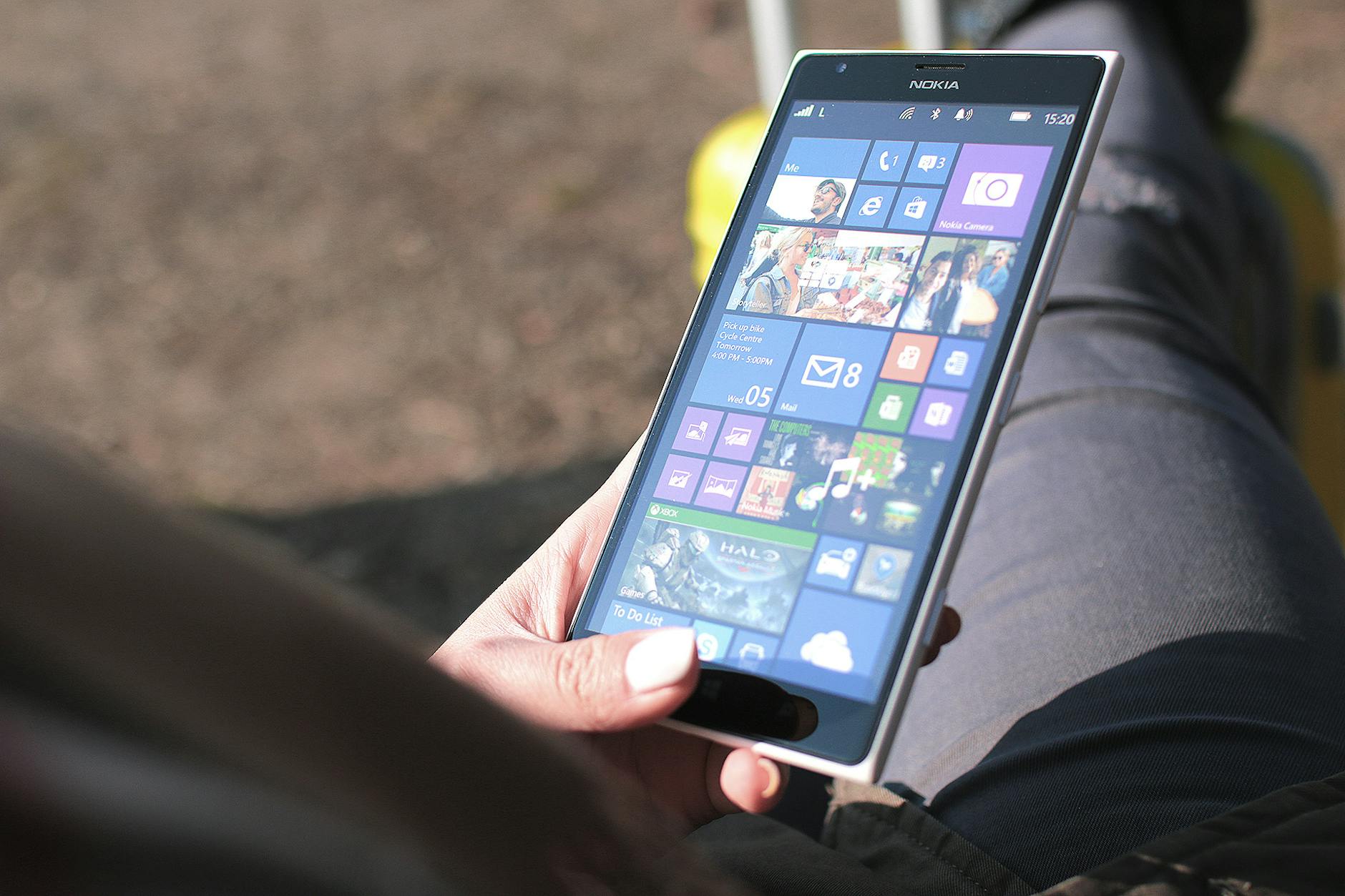
Windows is PC market leader but in the smartphones market, it is unable to keep that position. Windows failed in smartphones due to its own mistakes and late acquisition. 
Once the windows OS (operating system) in phones was the global leader followed by Blackberry and Symbian OS. But the condition got changed in 2007 after the launch of Apple's first iPhone. 

iPhone came with multi-touch capacitive touchscreen and the ios software was feature-loaded and finely tuned according to that time. On the other hand, Android was open source. It was compatible with numerous devices and was available in every price segment whereas Windows was not open source. Companies had to give some royalty to the windows to use their OS. Also, it ran on the keypad when android and ios adopted touchscreen. The software was boring whereas android and ios look enough modern at that time. They also attracted the attention of developers. One of the reasons for the failure of windows was not getting the good response from third-party apps developers. Because of the less active user, developers were less interested in working with Windows operating system. In this way, the huge market of windows phones went into the hand of ios and Android. 

Windows realized its mistake too late when the majority of the market was captured by android and ios. Last windows phone was Microsoft Lumia 950, launched in 2015 but failed to leave its mark and in providing stability to windows in the smartphone market.
Amazon Echo vs Google Home

Amazon Echo vs Google Home

Here is the quick comparison between the Amazon Echo and the Google Home. Five points highlight below will make you decide which is better:

As you know that Google uses 'Google Assistance' in its Google Home while Amazon uses 'Alexa' in its Echo for voice assistance.

Speaker:

By default, the speakers by the Google sound better. But the 3.5mm output jack on Amazon's Echo sounds better after little configuration. Alexa is also available on more third-party speakers than Google Assistant.

Sound Quality:

The 'Home' delivers much better and richer sound quality than the Amazon's Echo. However, both the Echo and the Google Home can be used as Bluetooth speakers for your phone, and both support multi-room audio.

Compatible:

Both devices support iHeartRadio, Pandora, Spotify, and TuneIn. The Echo also supports Amazon Music, while the Home supports Google Play Music and YouTube Red.

Wake Up Options:

The Echo has many wake up options like-  "Alexa" "Amazon" "Echo" in the female voice, believe me, its female voice is very pleasant. Whereas Google Home only has one wake up option, "Hey Google," but it now has both male and female voices. 

More helpful:

Alexa uses Wikipedia for queries related to general knowledge, while Google's home search comprehensively. Both can do things like spell words, set timers, and read the news. Google has superior multi-user functions.

Which one to buy?

I will recommend you should go for the Amazon Echo for the two reasons- First, it has impressive sound surrounding in the 3.5mm jack and secondly, Alexa is more refined than Google Assistant.

Buy Amazon Echo in Black Color: https://amzn.to/2LesDqr

Buy Amazon Echo Dot: https://amzn.to/2SHuTch

I have just explained the five difference between Amazon's Echo and Google's Home. Hope you guys understand. Guys share, comment and subscribe

**Do let me know which one you choose in the comment.***